Interactive calculators and easy-to-understand lessons that help you make smarter saving, investing, and borrowing decisions. Learn how interest, debt, and long-term habits shape your future—and gain the knowledge to make informed choices with confidence.
Free to use. No products to sell. No personal information required. Just the math, old-school — no AI involved.
Brought to you by Passerine Analytics™
Interest is the one idea behind saving, investing, and borrowing — it's the cost of using money over time, and it quietly shapes nearly every financial decision. Spend a few minutes here learning how interest works, both for you and against you, and the rest of the calculators will make a lot more sense.
The full set of calculators to model your own situation — with articles alongside to explain what you're seeing.
Every calculator pairs a plain-language explanation with a tool you can adjust.
The building blocks — interest, present value, and how money grows over time.
See how your money earns money, and that money earns money too, over 20+ years.
Open calculator →See what future money is worth today. Discount a single amount or a stream of payments, and compare future dollars to a lump sum offered now.
Open calculator →See what money today may grow to in the future. Project a starting amount, a stream of regular contributions, or both, and see how much of the ending balance comes from growth.
Open calculator →Find the yearly return that makes a lump sum today equal to a stream of future payments — for pension buyouts, lottery cash options, and settlements.
Open calculator →See how much profit or loss you earned relative to what you invested. Include income and costs, and get an annualized return when you enter a holding period.
Open calculator →See how inflation affects the real value of your money.
Open calculator →Retirement, allocation, and investing for the long term.
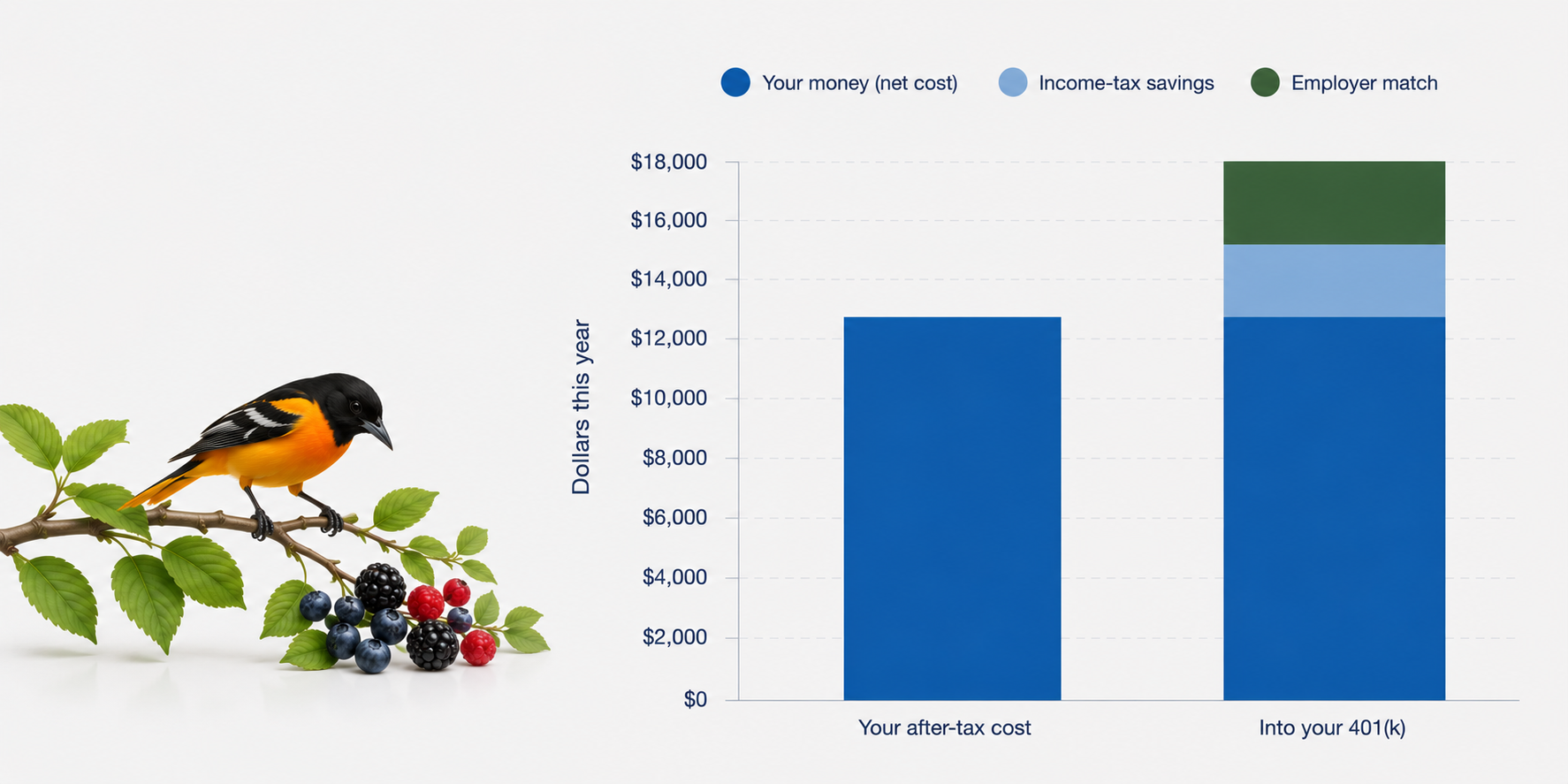
See how pre-tax contributions, employer match, and tax savings build long-term wealth.
Open calculator →See whether you're capturing the full employer match, how much you save on income taxes, and how your net cost is leveraged into a bigger total in your account.
Open calculator →Slide across real U.S. stock-market history to see how investing on a schedule compares to investing it all at once.
Open calculator →Compare low-fee and high-fee investments to see how fees quietly cost you over time.
Open calculator →Mix stocks, bonds, and cash to match your timeline and how much risk feels right.
Open calculator →See how your mix should shift from aggressive to conservative as you age — the glidepath that target-date funds use.
Open calculator →Retire with the same nest egg into different markets and watch eleven stock and bond mixes thrive, survive, or run dry.
Open calculator →Tools for paying down what you owe and protecting your credit.
See how extra payments can reduce your loan balance faster.
Open calculator →Compare avalanche, snowball, and cash flow strategies across several debts.
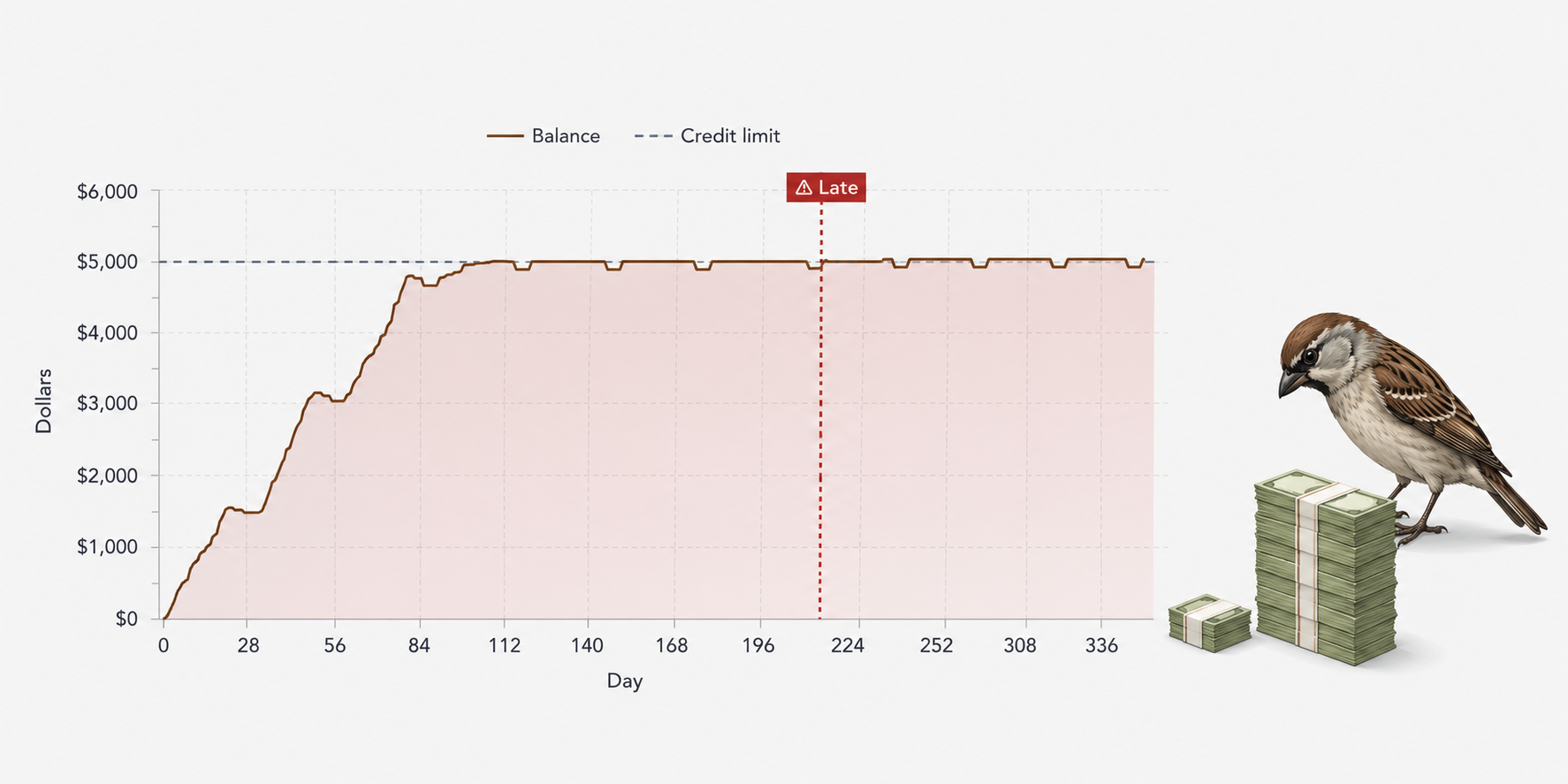
Open calculator →Play a credit card one month at a time: add purchases, choose how and when to pay, and watch the grace period and interest respond — month by month.
Open calculator →See how credit scores can change the cost of a car loan.
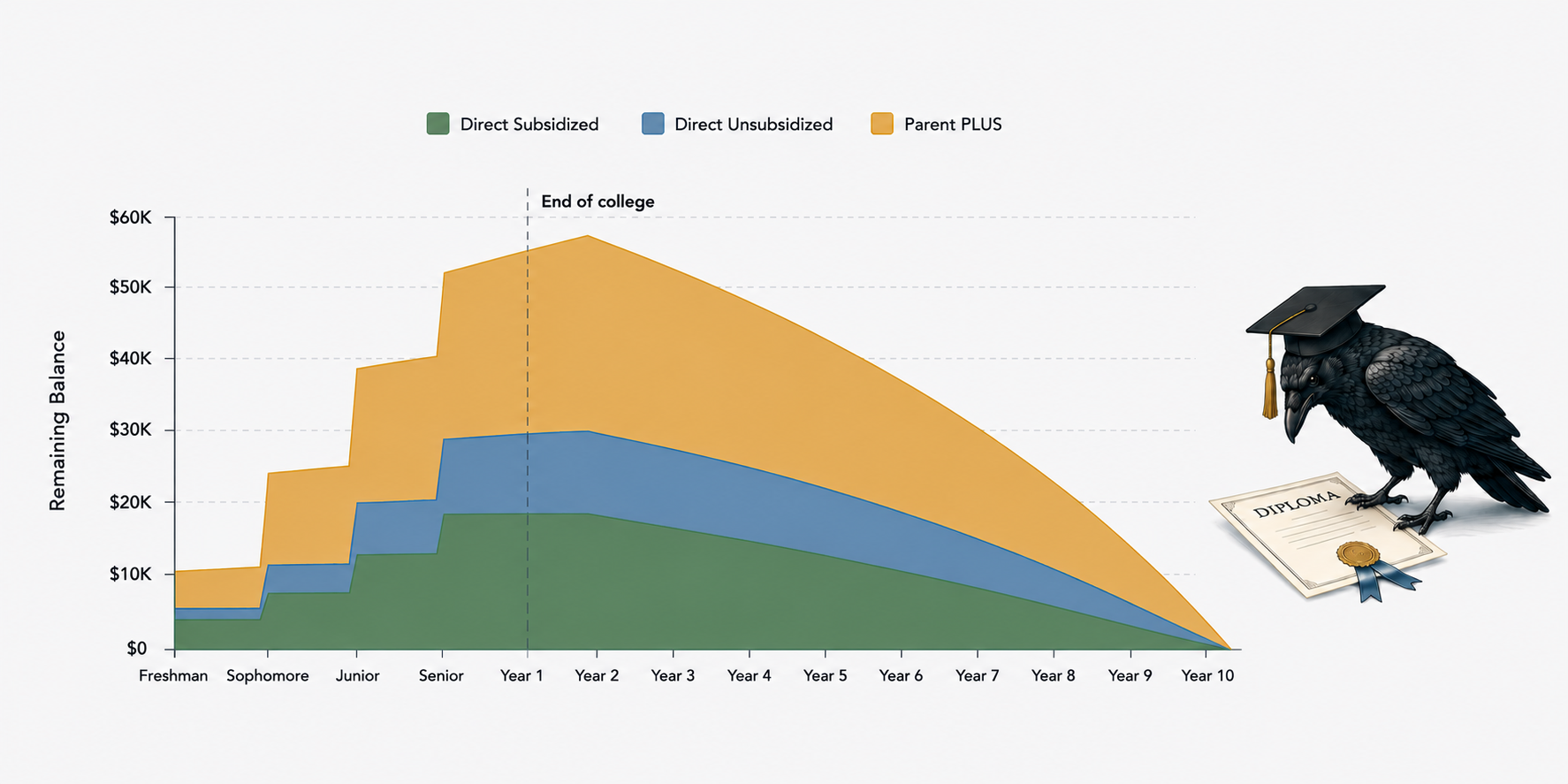
Open calculator →Understand the cost of borrowing for college before you sign.
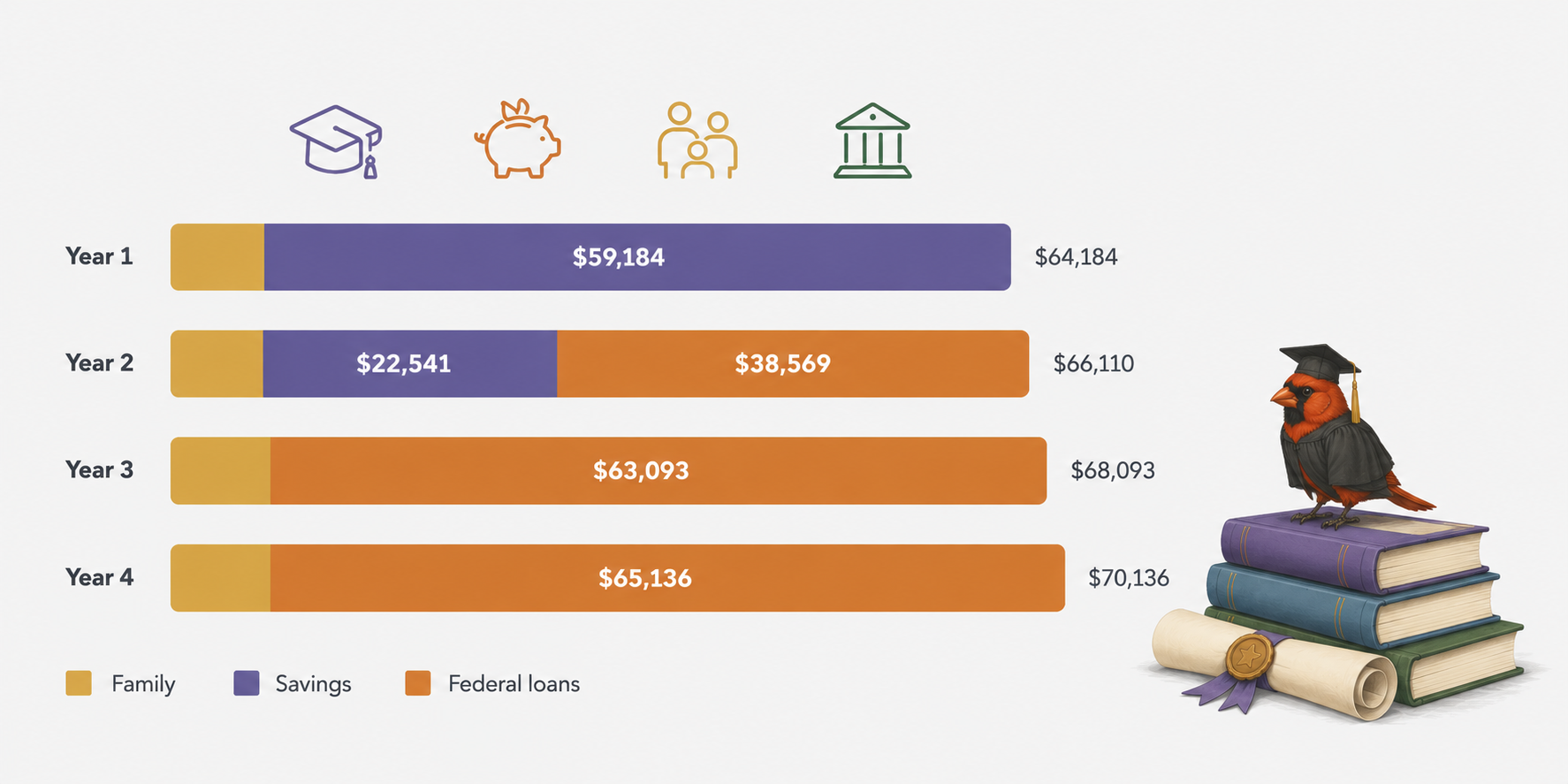
Start here. Build a complete plan on one page: enter the costs, choose what you can save, and let federal loans fill the rest — watching the gap close live, with full savings and loan detail built in.
✓ Updated for the 2026–27 federal loan rules — new Parent PLUS caps, effective July 1, 2026 Open planner →Plan any graduate path — master's, MBA, law, medical, or PhD — on one page. Estimate the full cost year by year, decide how much to save before you enroll, add scholarships, fellowships, assistantships, and other funding, then see how much you'd still need to borrow, with the gap closing live.
✓ Updated for the 2026–27 federal loan rules — new graduate & professional limits, effective July 1, 2026 Open planner →Plan college saving two ways: tell it your costs and get a monthly savings target, or start from what you can comfortably save and see where you stand — with costs inflated to the years you'll use them and any gap framed as something a loan can bridge later.
Open calculator →Decisions tied to buying and financing a home.
Save up or borrow — and how to think about car ownership.
The full finance-office decision: bonus or low rate, plus discount, down payment, sales tax, trade-in, and add-ons.
Open calculator →Compare saving for a bigger down payment against borrowing most of the price.
Open calculator →Compare monthly payments, ownership, and long-term car costs.
Open calculator →See how 48-, 60-, and 72-month loans trade a lower monthly payment for higher total interest.
Open calculator →Cash back or a low promo rate? See which one actually costs less on the same car.
Open calculator →The benchmarks and indicators you'll run into again and again — explained simply.
Monthly values of the broad U.S. stock market (Fama/French market returns) and the 10-Year U.S. Treasury yield since 1980, with an inflation-adjusted view in today's dollars.
Explore the benchmarks →Interest rates move together, led by the federal funds rate and the 10-Year Treasury — pick a period and watch auto loans and mortgages follow.
See how they move →No accounts to link, no pressure. Just clear lessons and calculators that meet you at your level.